Product · UI · Voice · 2026
Interactive3D CAD software for kitchen design

Try the prototypes
Marketing Landing
Public sales site with a simulated flow — click-through preview of what a customer experiences, no AI generation.
Customer Flow
The real end-to-end kitchen visualizer: pick inspiration, snap your room, get three AI-designed variants built from the studio's catalog.
Studio Dashboard
The studio's back-office: watch new customer sessions arrive in real time, review leads, manage the product catalog and inspiration pool.
Staff Admin
The internal cross-tenant view: onboard new studios, monitor session cost across the fleet, curate the shared inspiration library.
- Year
- 2026
- Location
- GER
- Role
- Founder · Product Design Lead
- Services
- Product · Voice UI · Software
Overview
Kitchen configurators are built around clicks, dropdowns and CAD tutorials. Visionary Kitchen turns the whole pipeline into a conversation — the customer speaks, the room responds, every rendered element pulled from the retailer's actual catalog.
A hundred years after Margarete Schütte-Lihotzky drew the Frankfurter Küche as a democratic project, the software that plans kitchens is still elitist. It expects users to think in floor plans, wall segments and SKU codes. Most people don't. They think in adjectives — bright, warm, honest, unfussy.
Retailers know this. Their sales conversations are full of language the software refuses to accept. The customer says "something in a warm oak with black handles"; the seller spends the next twenty minutes clicking through 3D menus to translate it. The friction is one-sided — the software asks the human to shrink into its grammar.
Visionary Kitchen was built around the opposite bet: the catalog is the constraint, not the interface. Let the user speak in their own language; do the translation quietly, in code.
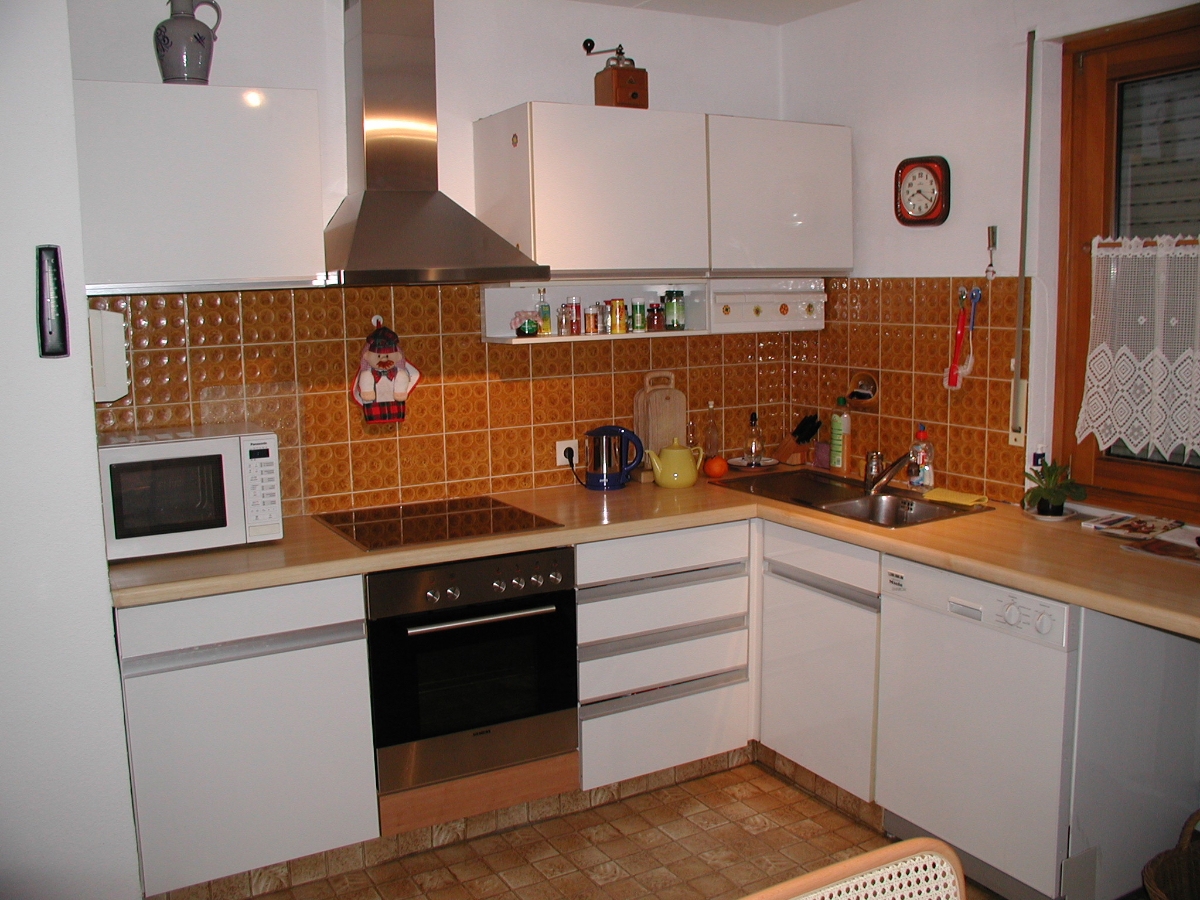
The gap
From a room the customer already lives in to a room the retailer can actually deliver.
Every kitchen sale begins with a room that has to change and a picture in the customer's head that can't quite be drawn. The current tooling asks the customer to draw it anyway. Visionary Kitchen asks them to describe it.

Output — every element in this render comes from the retailer's live product catalog.
Voice
The customer speaks. Intent is parsed by an agent trained on kitchen-domain language — surfaces, fronts, hardware, moods.
Catalog
Every visible element maps to a real SKU in the retailer's live catalog. Nothing generic, nothing stock, nothing that can't be ordered.
Realism
Photorealistic 3D rendered in the browser. What the customer sees is what the retailer can deliver on install day.
"Kitchen software still expects users to think in floor plans. Most people think in adjectives."
— from the project notebook



Three room outputs from the same room, three prompts — "warm and lived-in", "airy and honest", "linen and oak".
Under the hood: a multi-provider AI pipeline (Gemini and OpenAI) parses the customer's spoken intent, an agent maps it into the retailer's catalog space, and a React-Three-Fiber renderer composes the space in the browser. Every stage is inspectable, versioned, and rollback-able — the retailer stays in control of what the model is allowed to suggest.
The product is white-label: the retailer's brand, the retailer's catalog, the retailer's terminology. The software disappears into the buying process. Customers don't notice they're using a tool — they notice their kitchen showing up on screen while they talk.
It's not a coding device. It's the same argument as one: the interface between intent and outcome should not be a keyboard. It should be the language a person already uses to describe what they want.
Process
From an observation to a shipping product.
-
Step 01 — Observation
Ride-alongs with kitchen sales staff and studio owners surfaced the same friction over and over: the software asks the customer to describe the kitchen in a language they don't speak.
-
Step 02 — Prototype
A Figma prototype paired voice input with a small set of fabricated outputs. Retailers were shown the loop without any working backend, and their reactions built the roadmap.
-
Step 03 — Voice pipeline
A multi-provider AI backend (Gemini + OpenAI) turns spoken intent into structured, catalog-mapped kitchen plans. Supabase manages the state, the sessions, and the retailer catalogs.
-
Step 04 — Rendering
React-Three-Fiber composes the room in the browser using the retailer's real product geometry. Every finish, every hardware piece, every counter surface is a live catalog reference — not a lookalike.
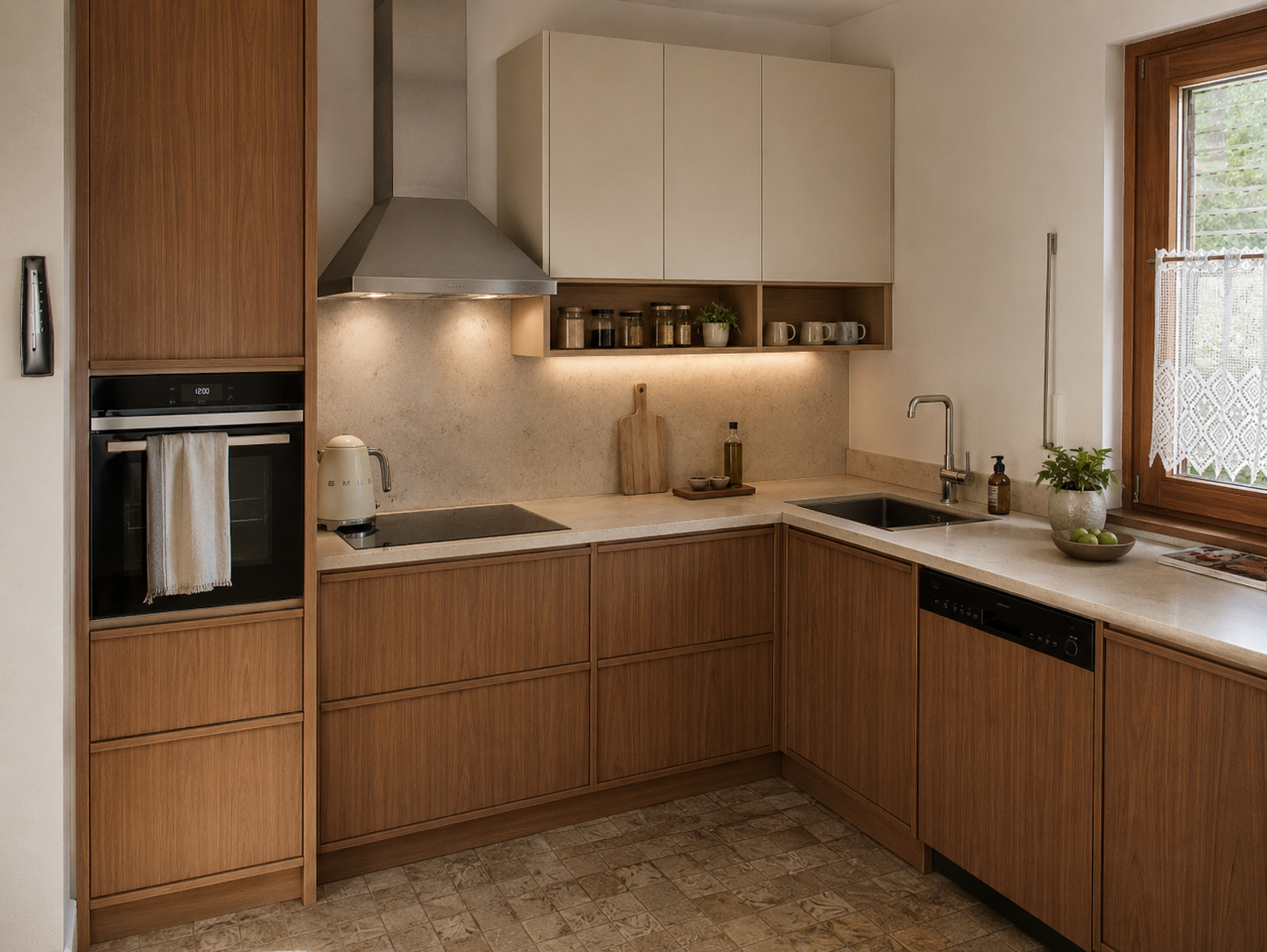
Prompt: "warm, unfussy, oak counter, brass handles."
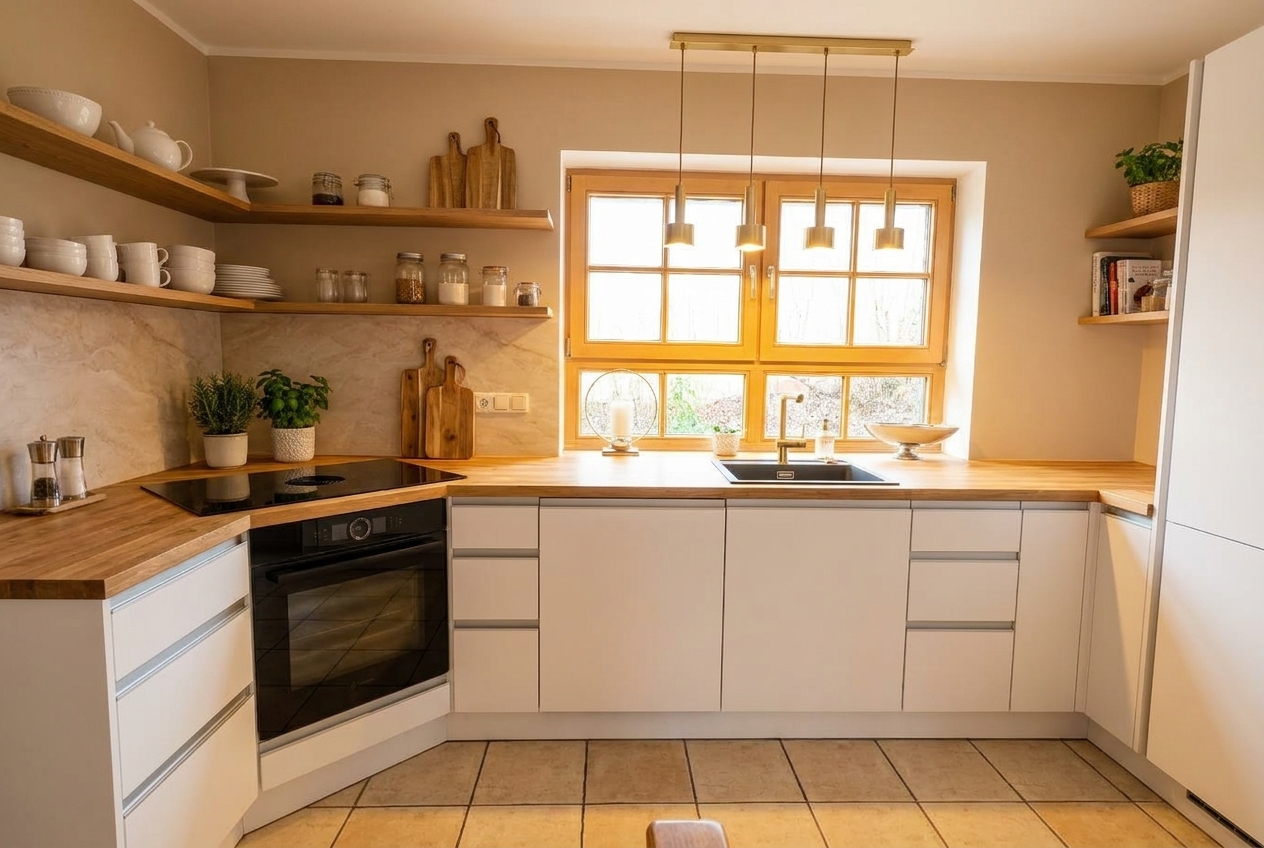
Prompt: "bright, airy, oak counter, white shaker fronts."
Credits
- Founder · Product Design Lead Max Julian Fischer
- AI Providers Gemini · OpenAI
- 3D Engine React Three Fiber
- Backend Supabase