Hardware · UI · Voice · 2026
Form Factor for AI Voice Interaction

- Year
- 2026
- Location
- BER & SF
- Role
- Founder · Product Design Lead
- Services
- Hardware · Interaction · Voice UI
Overview
Language came first. Every other interface — the mouse, the touchscreen, the keyboard — has been a workaround. CAIO returns the primary channel to the primary channel.
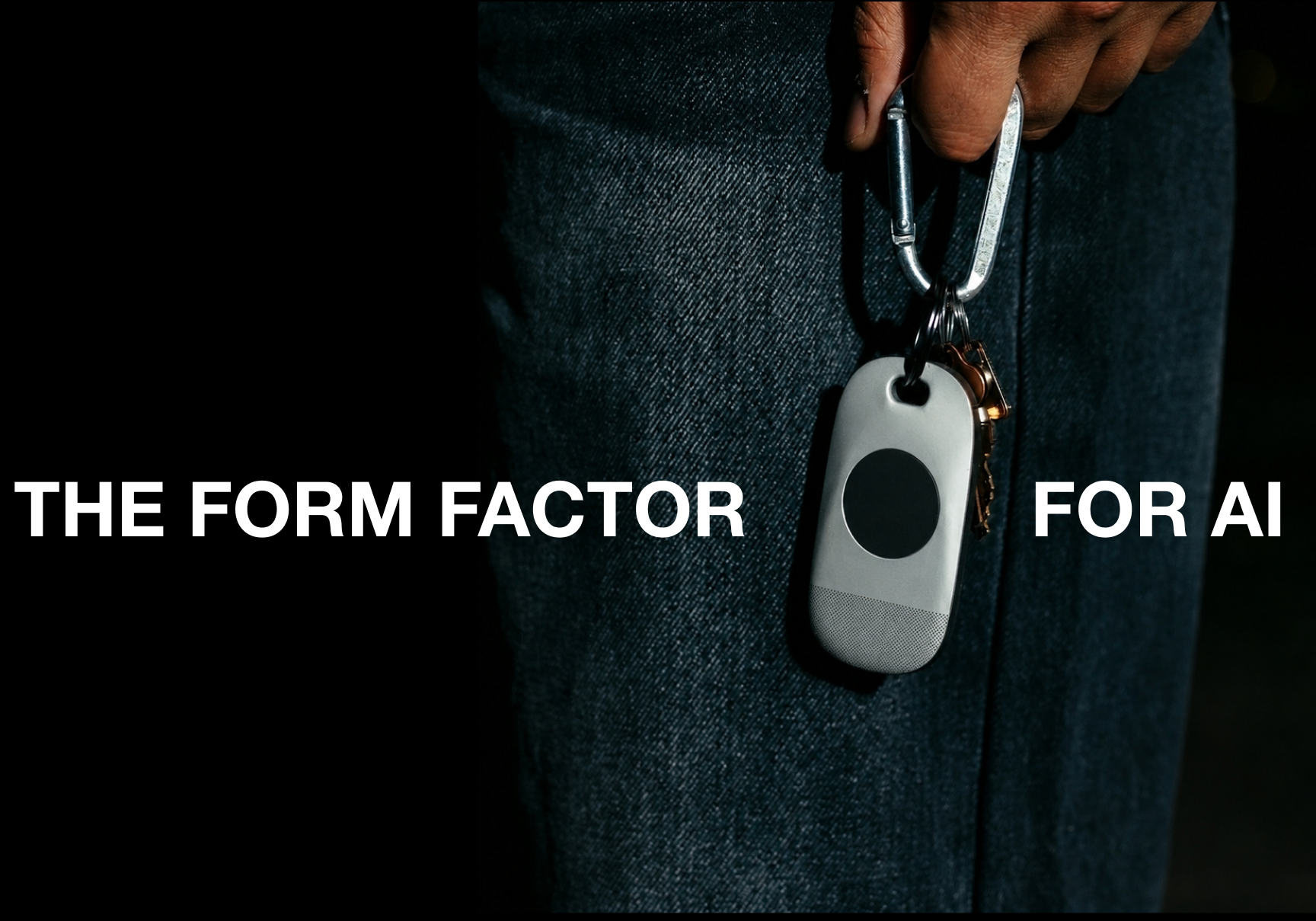
When Douglas Engelbart demoed the mouse in 1968, he wasn't inventing an interface — he was compensating for one that couldn't yet exist. The Alto, the Macintosh, the iPhone all built on the same premise: hands as translators between intention and machine.
It worked. It also cost something. Every generation of interface has moved us further from the way we naturally think — which is to say, aloud. We shape our thoughts into keystrokes, our ideas into syntax, our conversations into commands. The device beneath the palm doesn't hear us. It reads what our hands report.
The keyboard is the most tolerated bottleneck in consumer technology. We tolerate it because there has been no alternative worth the switching cost. That's the gap CAIO is designed to close.
The Case
Voice coding is emerging. It has no object yet.
The observation that started the project: modern AI tools have quietly made voice coding a viable workflow. But every voice interaction still routes through a phone, a laptop mic, or a set of meeting headphones. The category exists. The form factor doesn't. The case for CAIO was written in five spreads before a single line of CAD.
"No tool is forever. No barrier is forever. The voice remains — the first thing and the last, older than writing, plainer than code, the purest form of expression."
— from the concept doc, spread IV
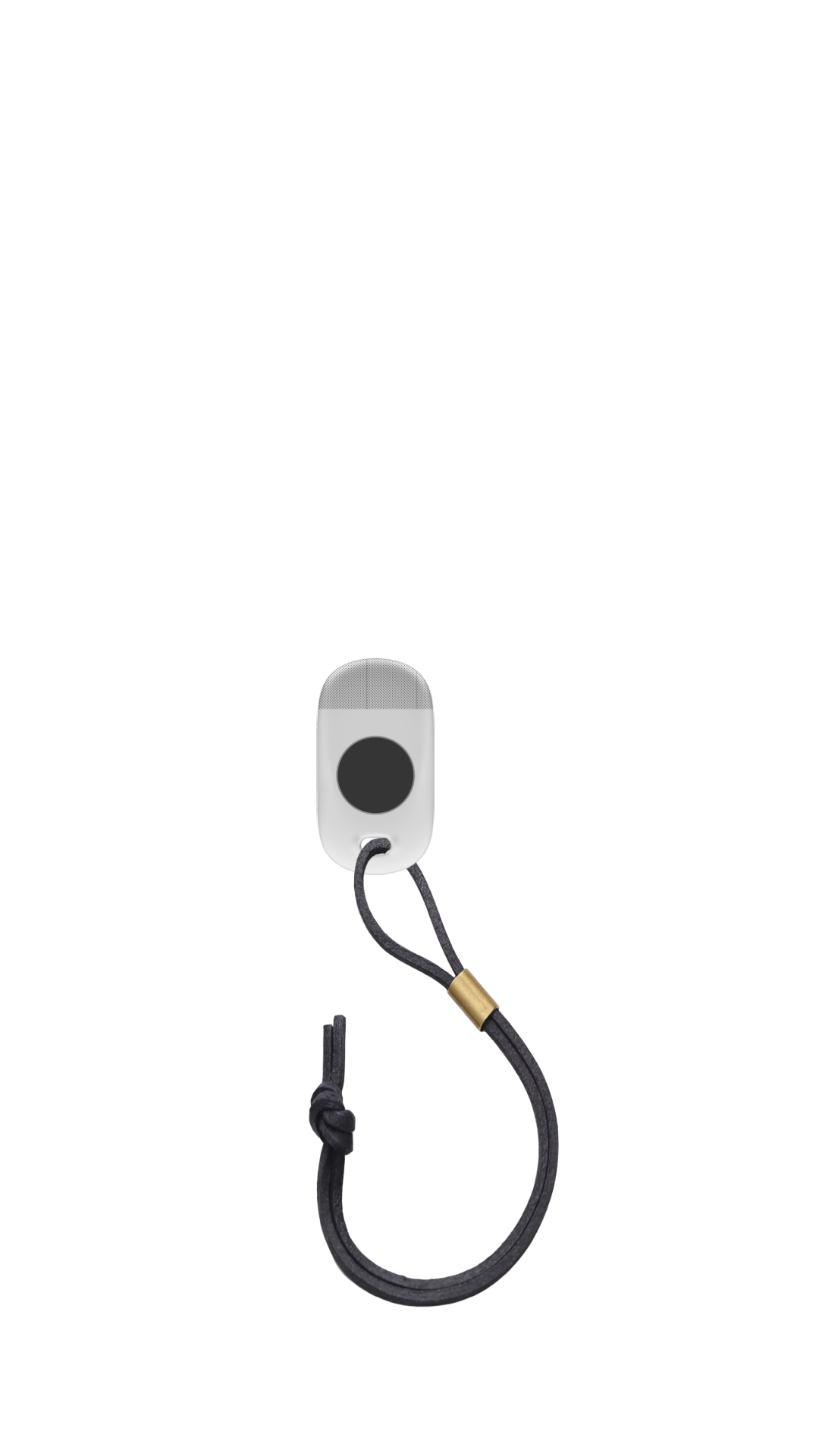
Form
A device you hold, not one you type on.
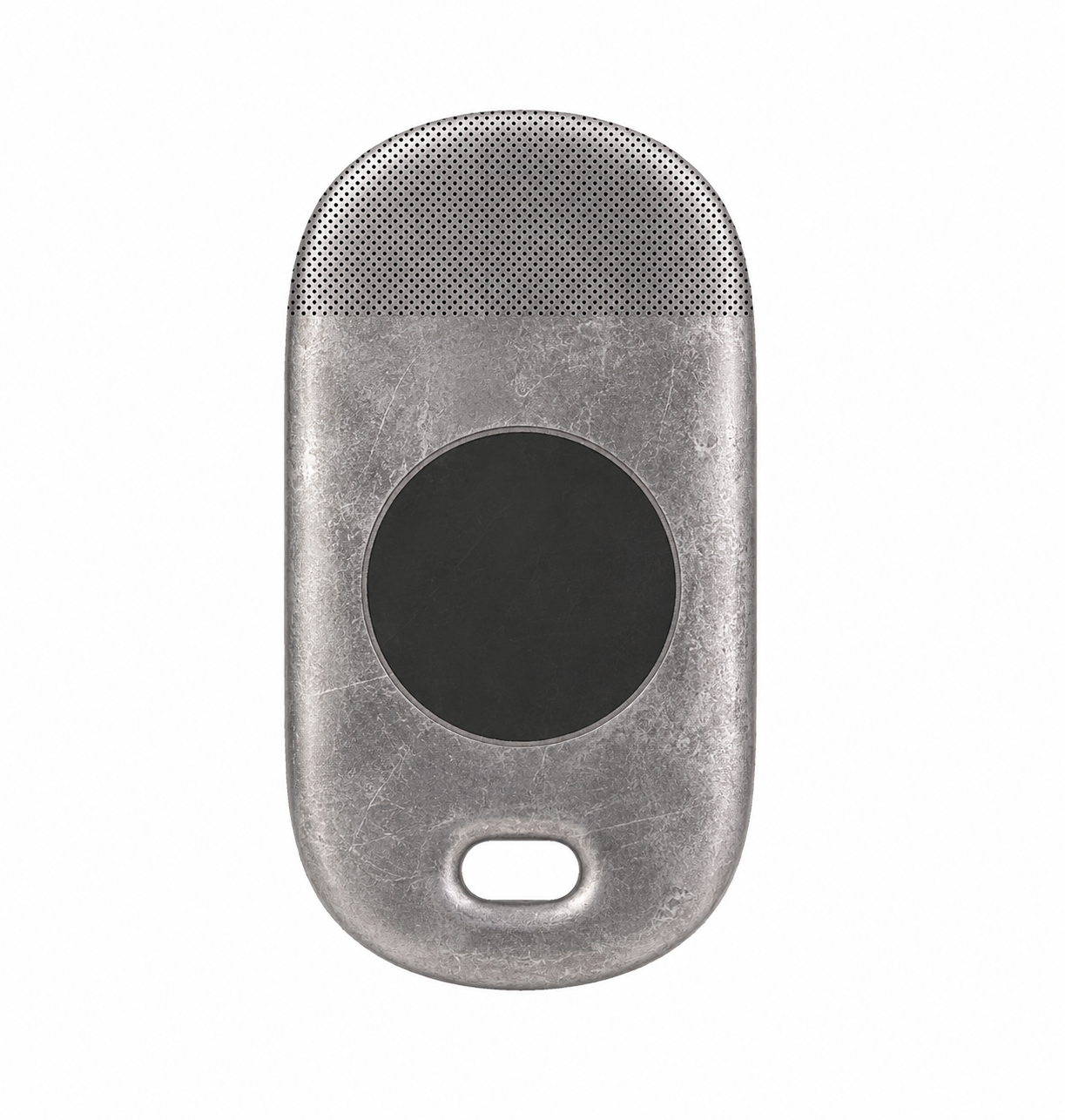
Milled aluminium body, satin-brushed. A single circular button. A leather cord for the wrist or the belt loop. Nothing to configure, nothing to unlock. Lift it, speak.

In use — an object that carries itself.
Concept
Voice as the primary channel. Screen as the response. The keyboard becomes optional, not required.
Craft
One material, one button, one gesture. Every decision defended against additions. Nothing you have to explain.
Cadence
Held to the mouth, released, done. The interaction ends when you stop talking — no confirmation dialog, no send.
"The keyboard was never the point. It was a translation layer we forgot to remove."
— from the project notebook
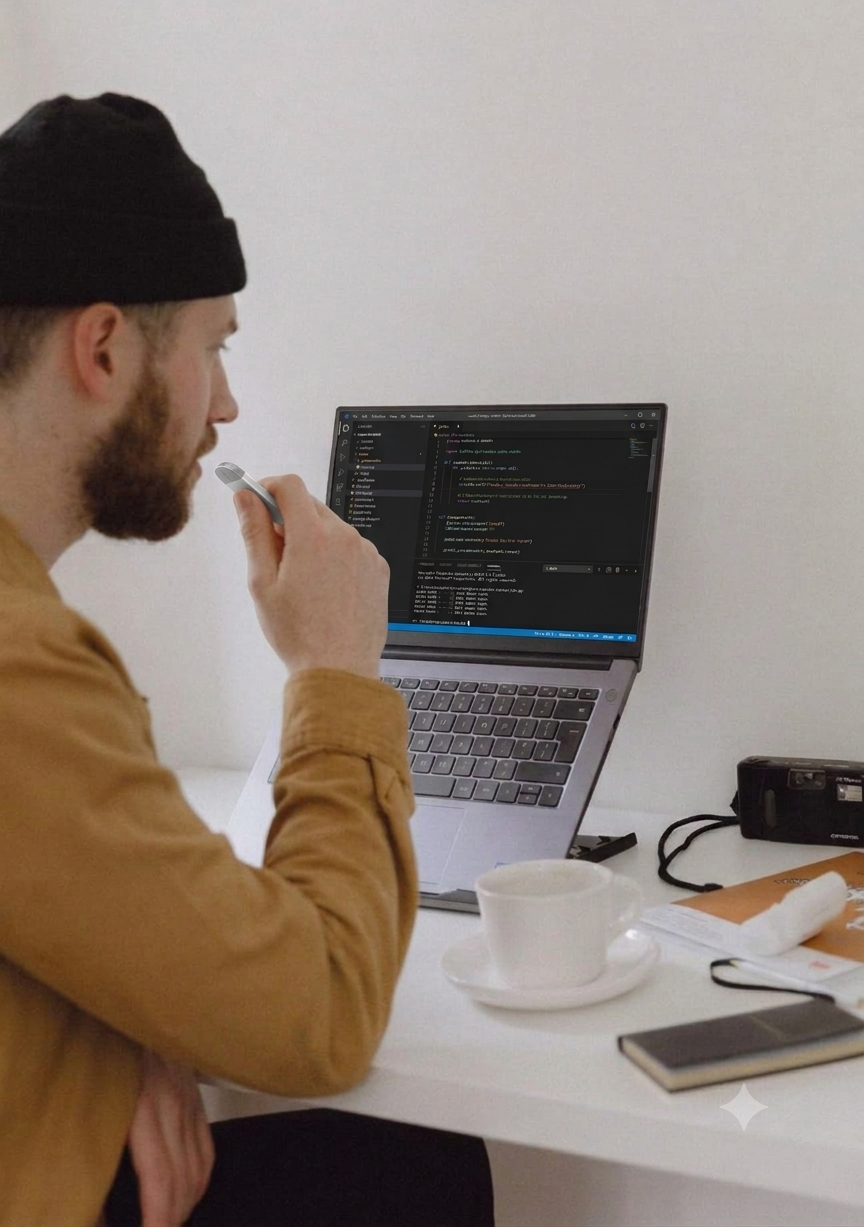
Voice coding — mid-sentence.
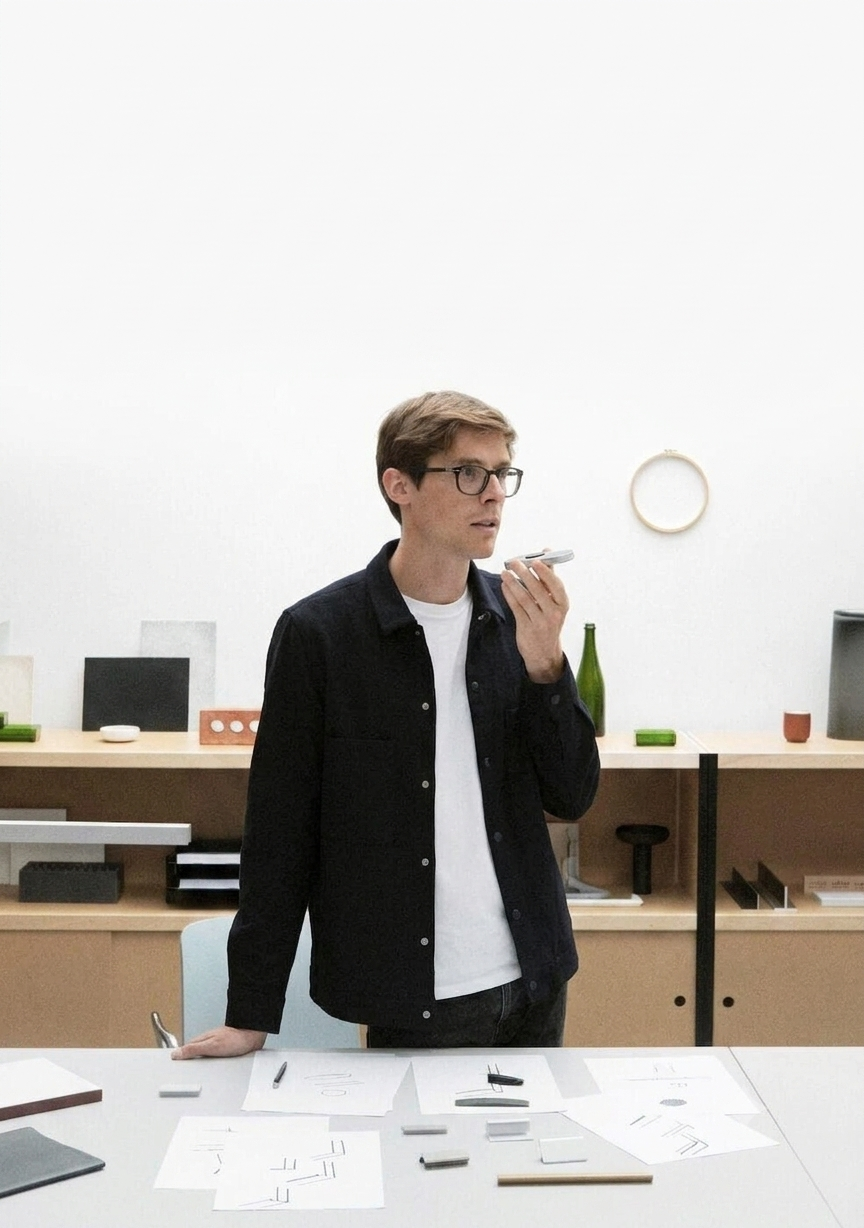
Studio — thinking aloud.
CAIO's first application is coding — not because the developer market is the largest, but because it's the most extreme case of the translation problem. Millions of people who think in prose spend their days translating intent into brackets, into indents, into precise strings of characters. The friction is enormous and largely invisible.
Speak your intent. The device transcribes. The model shapes it into code. The screen updates. The loop closes without your hands leaving the coffee cup, without your posture collapsing into the keyboard.
But CAIO is not a coding device. It is a device that treats voice as the primary channel — and coding is where the current cost of the alternative is highest. Writing, planning, creating, thinking-in-public — each is on the same trajectory. The keyboard is the workaround that outlived its usefulness.
Process
From an observation to a machined object.
-
Step 01 — The Case
Voice coding was mapped as an emerging workflow with no object of its own. Five concept spreads laid out the problem, the historical arc, and the position CAIO would take — the argument before any component was drawn.
-
Step 02 — Iteration
Dozens of paper silhouettes, then digital form studies in Photoshop and Rhino. Everything asked the same question: what shape lets the interaction end when you stop talking?
-
Step 03 — Engineering
ESP32 microcontroller, I²S microphone, LiPo cell, milled aluminium enclosure. The internals were sized to the silhouette the book demanded — not the other way around.
-
Step 04 — In the world
Photographed against marble, denim, morning light — the same spaces the device is meant to travel through. Nothing staged that isn't how the object actually gets used.


Credits
- Founder · Product Concept Max Julian Fischer
- Industrial Design In-house
- Voice Model Cortea AI
- Photography Studio TBD